Slow your pace
Move and speak more deliberately instead of matching the speed and urgency of an escalating moment.
Practical guide for early childhood educators
What do children need from us before we ask them to regulate themselves?
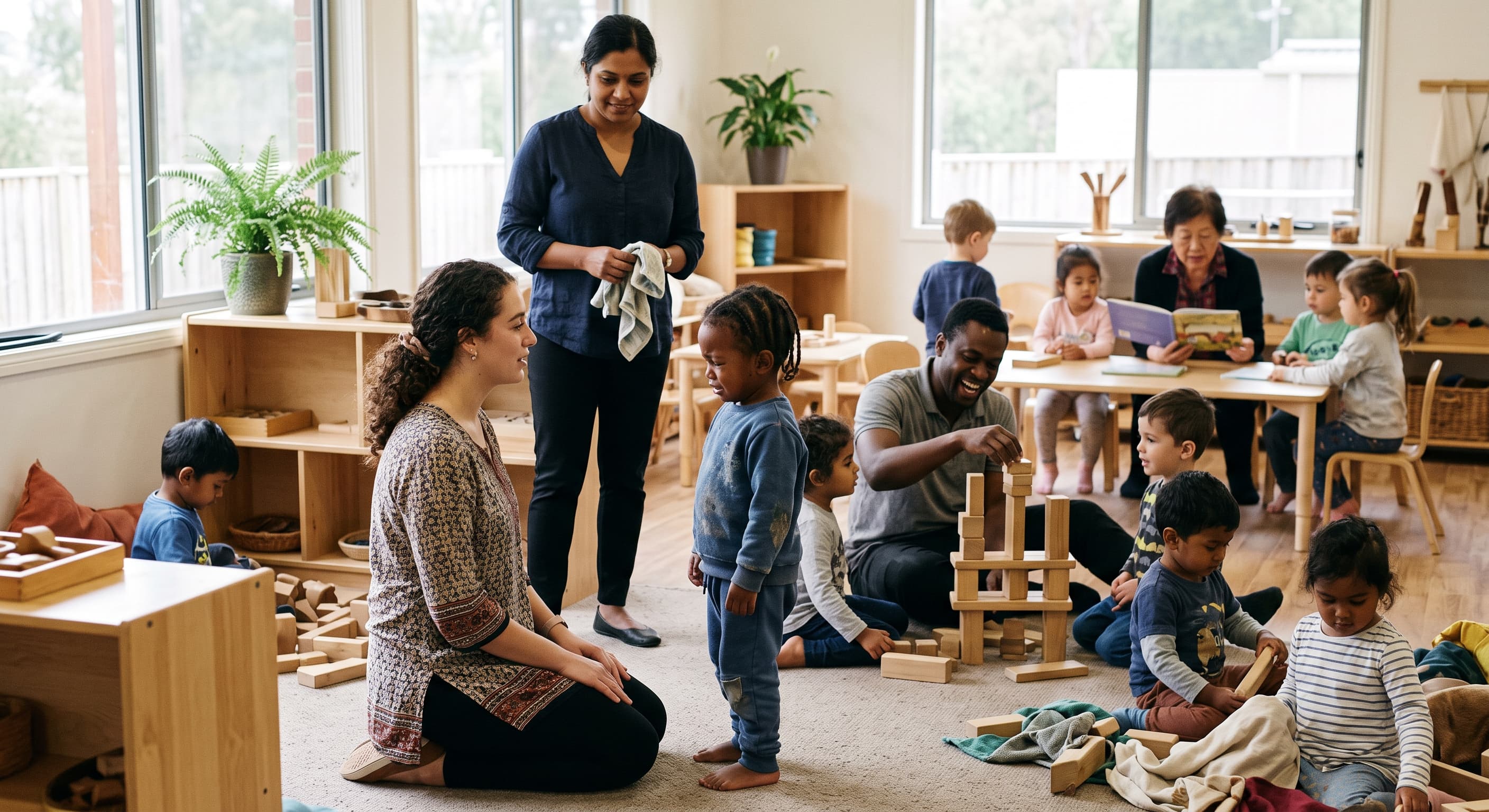
Co-regulation is not about making children calm on command. It is the support adults provide through relationship, environment, language, pacing, movement and predictable responses while children are still developing their own regulation skills.
In practice, co-regulation often begins with what the educator notices and changes before expecting the child to do something differently.
What is co-regulation?
Co-regulation is the responsive support one person provides to another during a difficult, demanding or emotionally intense moment.
For young children, that may mean reducing demands, changing the environment, offering connection, using fewer words, allowing movement or simply helping the next step feel more manageable.
Co-regulation and child development
Young children are still developing the ability to notice internal states, stop an impulse, shift attention, cope with change and recover after frustration.
That is why expecting a distressed three-year-old to simply “use their calming strategies” can miss an important part of development. The child may not yet be able to access those skills independently when the demand is high.
Co-regulation provides support while those abilities are emerging. Over time, repeated experiences of being supported through difficult moments can contribute to children gradually managing more of those demands themselves.
What co-regulation can look like
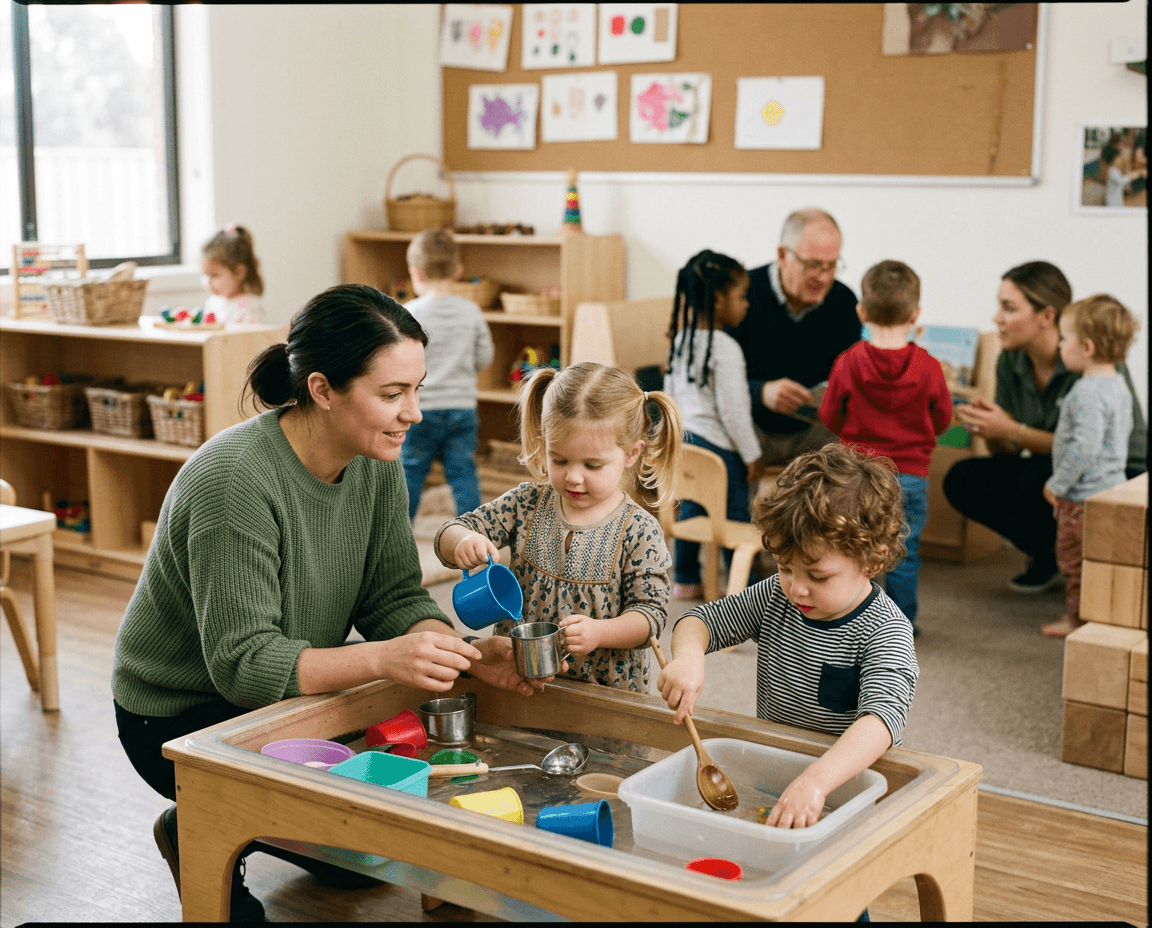
Sometimes co-regulation is being physically close. Sometimes it is giving more space. Sometimes it is moving together, carrying something heavy, pouring water, lowering the noise, changing where an activity happens or simply removing one unnecessary instruction.
The useful question is not “Which calming strategy should I use?” but “What is happening for this child right now, and what part of this moment can I make more manageable?”
Co-regulation strategies for educators
Co-regulation does not need to begin with a special resource or sensory tool. Sometimes the most useful change is in our pace, language, positioning or environment.
Move and speak more deliberately instead of matching the speed and urgency of an escalating moment.
Long explanations can add demand when a child is already overwhelmed. Keep language short, clear and relevant.
Reduce crowding, noise, visual demand or unnecessary social pressure before expecting the child to manage more.
Consider adult height, distance and body position so you can remain available without crowding or looming over the child.
Children often cope better when they know what is happening now and what will happen next.
Some children regulate more effectively when movement is part of the response rather than something they are immediately expected to stop.
Beyond calm-down strategies
Breathing activities, sensory tools and quiet spaces can all be useful. The problem comes when the strategy becomes the answer before we have understood the difficulty.
A child may still struggle if the room remains too noisy, instructions keep coming too quickly, the transition is unpredictable or the adult is adding more pressure than the child can currently manage.
Sometimes the most useful regulation strategy is changing what is happening around the child.
But it should not become somewhere children are routinely sent away to regulate alone.
But controlled breathing during peak distress may become another instruction the child cannot manage.
But the tool should match the child and the reason they are struggling rather than becoming a generic response.
But they work best when the child understands them and adults use them predictably.
Connection before instruction
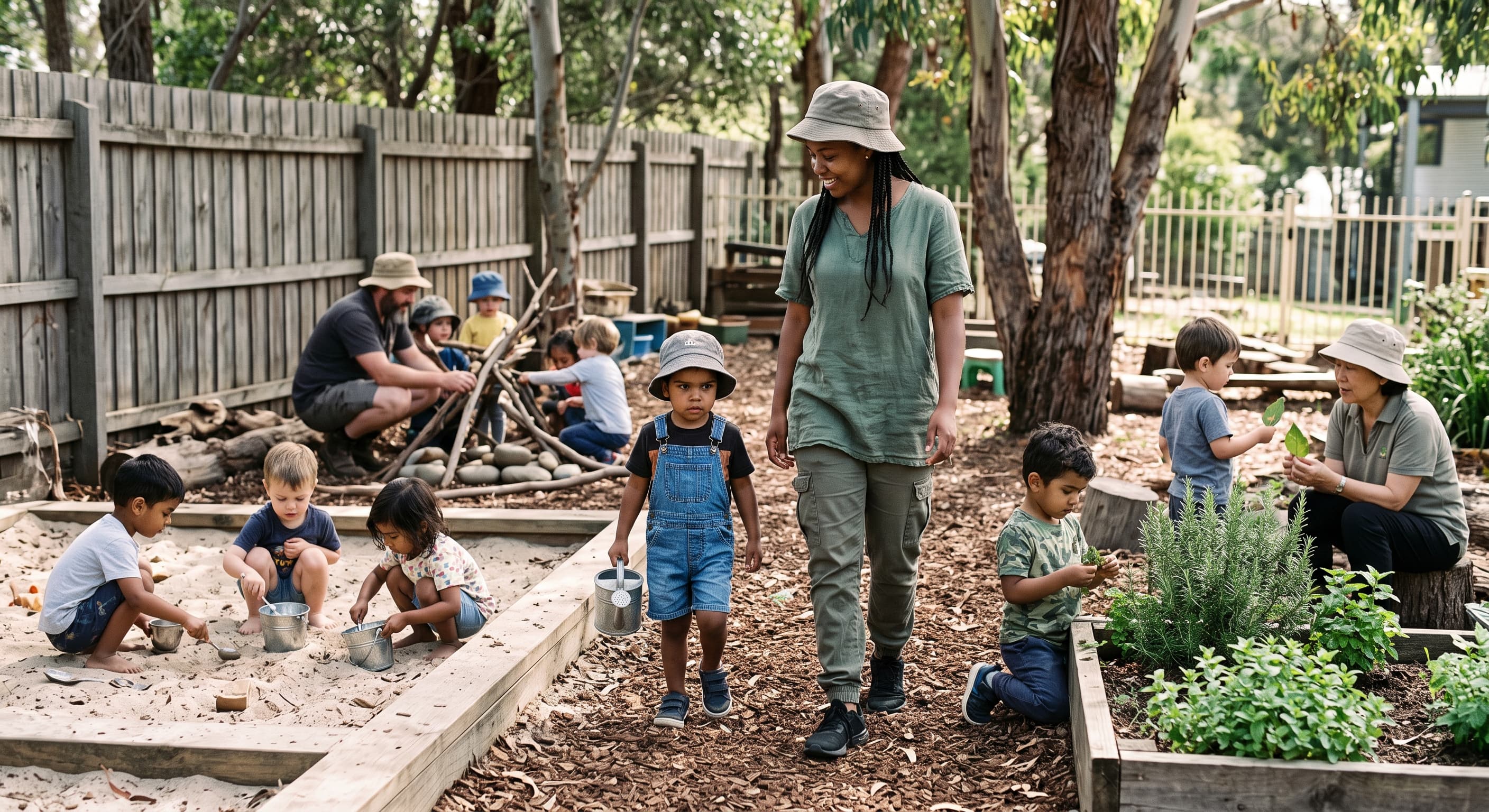
Carrying a watering can, moving a basket, helping in the garden or walking beside an educator can offer movement, purpose and connection without turning regulation into another task the child has to perform correctly.
None of these activities is automatically regulating for every child. The important part is noticing what happens to the child's engagement, body, communication and connection as the experience changes.
The educator is part of the environment
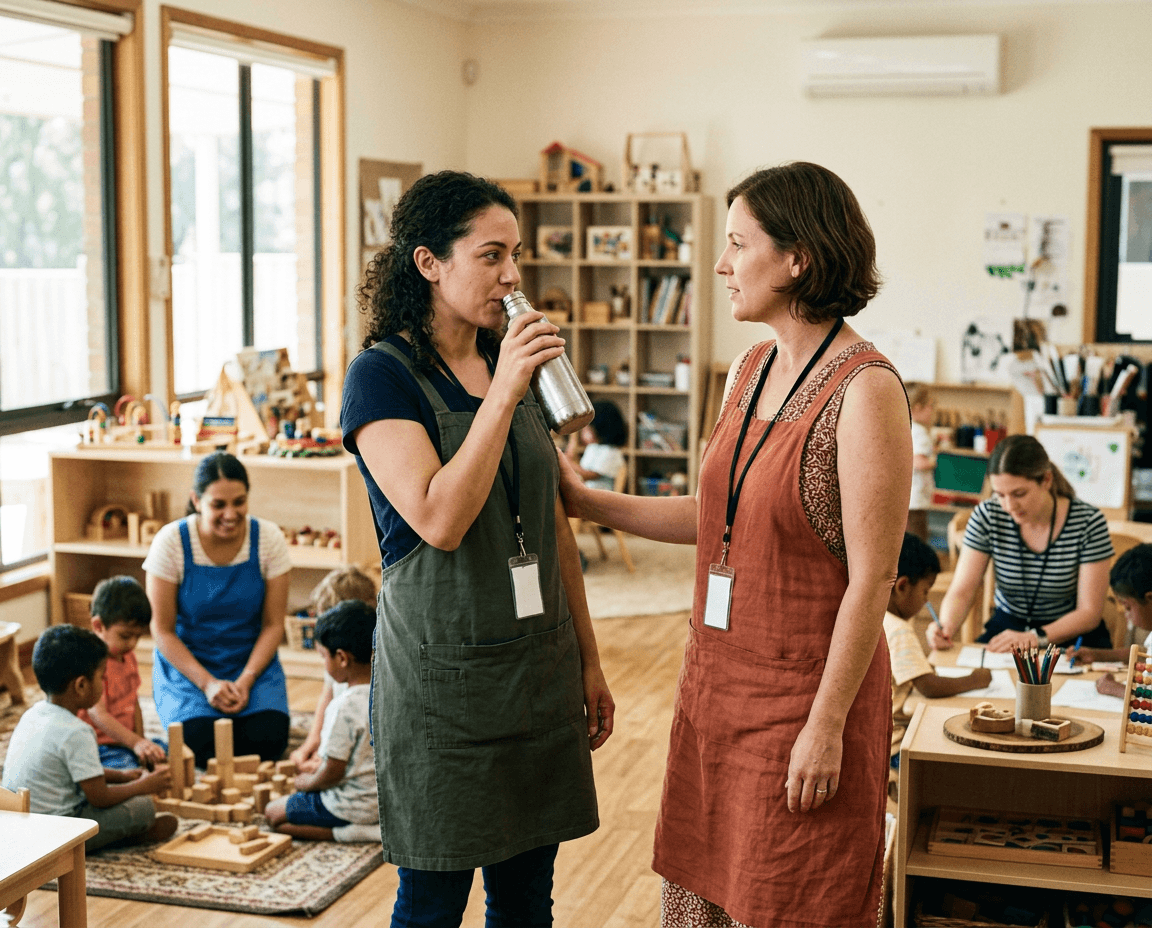
Educators do not need to be perfectly calm before supporting a child. They do benefit from noticing when their own stress is making them speak faster, add more words, move abruptly or become less flexible.
Sometimes the best next step is another educator quietly stepping in, offering a brief moment of support, or giving their colleague enough space to slow down before returning to the interaction.
That does not mean leaving children unsupported. A well-functioning team can share the regulation load while other educators continue engaging with and supervising the group.
Co-regulation during transitions
Pack-up, arrivals, group time, handovers and moving between indoor and outdoor play all require children to stop one thing, shift attention, hold information, cope with change and respond to adult expectations.
When the same transition repeatedly leads to distress, running, refusal or conflict, it is worth examining the routine itself rather than automatically adding more reminders.
A predictable cue may reduce the sudden demand involved in stopping an activity.
One clear step can be easier to process than several directions delivered at once.
Walking, carrying or completing a purposeful movement task may help some children shift more successfully.
Doorways, crowding, noise and waiting can make an otherwise simple transition much harder.
Whole-team co-regulation
Good co-regulation is responsive. Different children and situations will require different responses. What matters is whether the team is making those decisions from shared principles.
Educators understand ideas such as regulation load, co-regulation, sensory demand, executive function and participation.
The team understands that noticing and reducing unnecessary demand can be more useful than immediately adding instructions.
Educators can discuss difficult moments without automatically blaming the child or the adult involved.
Put this thinking into practice
The free Regulation Ladder shows the same situation from educator, manager and family perspectives so the response does not sit with one person or one strategy.
Open the Free Regulation LadderKeep exploring
Look at what children may be communicating through movement, shutdown, overwhelm and big emotional responses.
Explore what makes professional learning more likely to change everyday educator practice.
Explore how leaders can strengthen educator judgement rather than simply adding more strategies.
Quality and professional learning pathways
These pages provide additional information for teams considering professional development within different quality, funding and improvement systems.
NAEYC, Developmentally Appropriate Practice, QRIS and child care quality improvement.
National Quality Standard and Quality Improvement Plan connections.
Information for Victorian kindergarten services.
Information for Queensland kindergarten services.
Frequently asked questions
Co-regulation is the support an adult provides while a child is developing their own regulation skills. It can include relationship, language, environment, predictability, pacing and responsive guidance.
Self-regulation describes the child’s developing ability to manage internal states, attention, impulses and behaviour more independently. Co-regulation is the support another person provides while those abilities are still developing.
No. Co-regulation may help a child settle, but the broader goal is connection, participation, recovery and learning rather than simply making visible emotion disappear.
Yes. Co-regulation can include clear boundaries. The adult still protects safety and holds expectations while considering the child’s current state and capacity.
Children interact with multiple educators. Shared principles can make support more predictable even when individual educators use slightly different words or strategies.
About Robyn
Robyn is an Accredited Exercise Physiologist and Developmental Educator and the founder of Play Move Improve. Her work with early childhood teams focuses on regulation, movement, sensory processing, executive function, participation and practical co-regulation within everyday learning environments.
Regulator Champions helps early childhood teams notice what may sit underneath behaviour, reflect on difficult room moments and decide what to try next together.
Six-month and twelve-month whole-team options are available.
This page provides general professional learning information for early childhood educators. It is not individual clinical advice and should not be used to diagnose a child or assume that a particular behaviour has one specific cause.