Movement changes
Some children move more when regulation is becoming difficult. They may pace, run, crash, climb, fidget, wander or seem unable to stay with the group in the way adults were expecting.
Practical guide for early childhood educators
When behaviour becomes difficult, the most useful question is often not how to stop it, but what the child may be communicating through it.
Emotional regulation is not simply about whether a child looks calm. It is about whether they can stay connected enough to participate, cope with change, move through frustration, recover after stress and manage the ordinary demands of early childhood life with growing support and skill.
Children show us a great deal through their bodies before a situation becomes big, and the earlier educators notice those signs, the more thoughtful and effective their response can become.
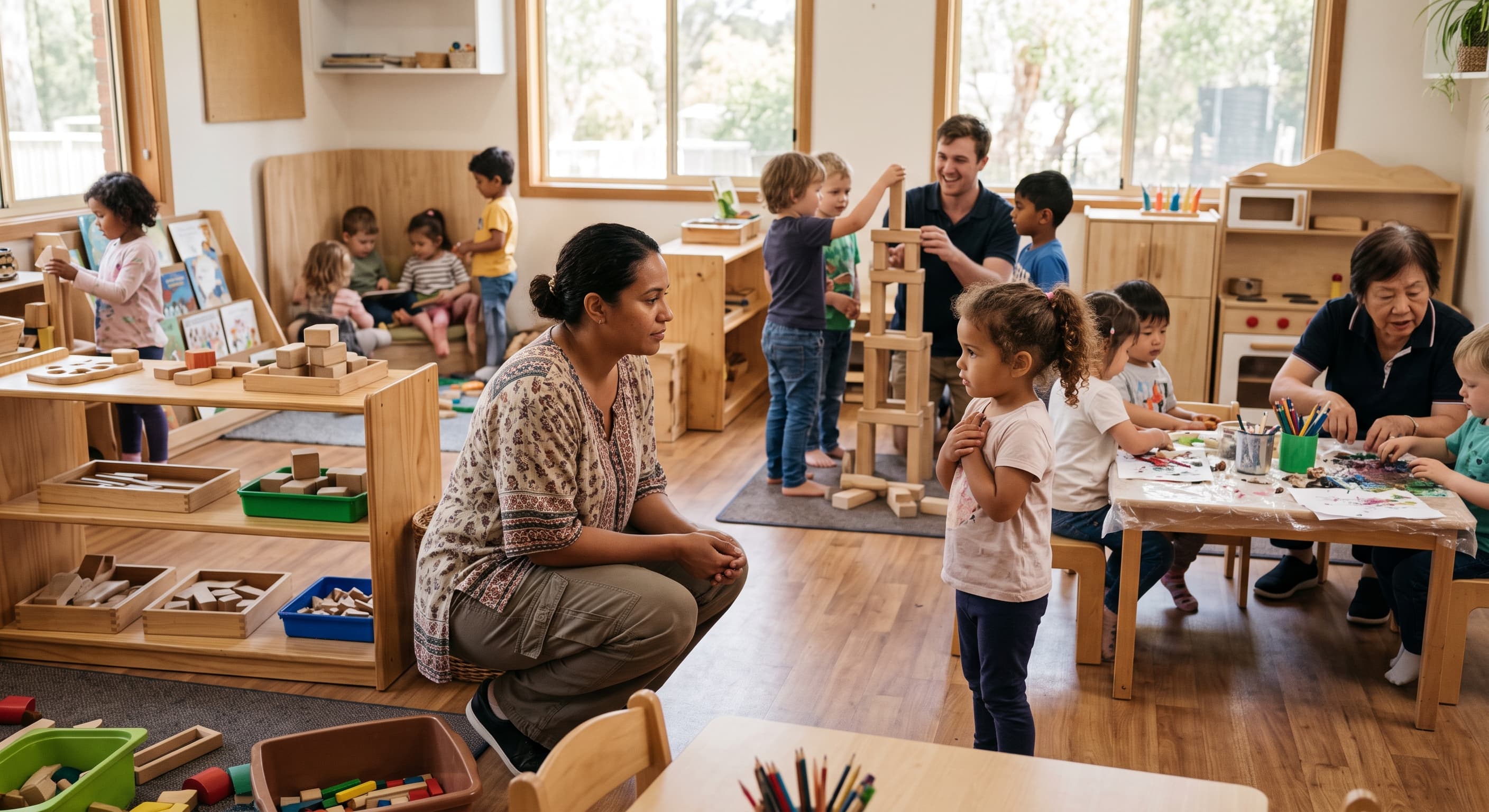
A useful reframe
Emotional regulation difficulties do not always begin at the moment of visible behaviour. They often begin earlier, in the child’s body, attention, movement, sensory experience or capacity to manage what the environment is asking of them.
What emotional regulation means
In early childhood, emotional regulation involves a child’s developing ability to cope with disappointment, hold onto a plan, wait, recover after frustration, manage the demands of group life and keep returning to connection and participation even when things do not go smoothly.
Because these abilities are still developing, many children need adult support while moving through big feelings, changing routines, noisy rooms, social conflict, separation, tiredness or sensory overload. That is why it helps to think less in terms of “good behaviour” and “bad behaviour” and more in terms of what the child’s system may be able to manage in that moment.
When we start there, we are far more likely to notice what the child needs before we simply react to what the child is doing.
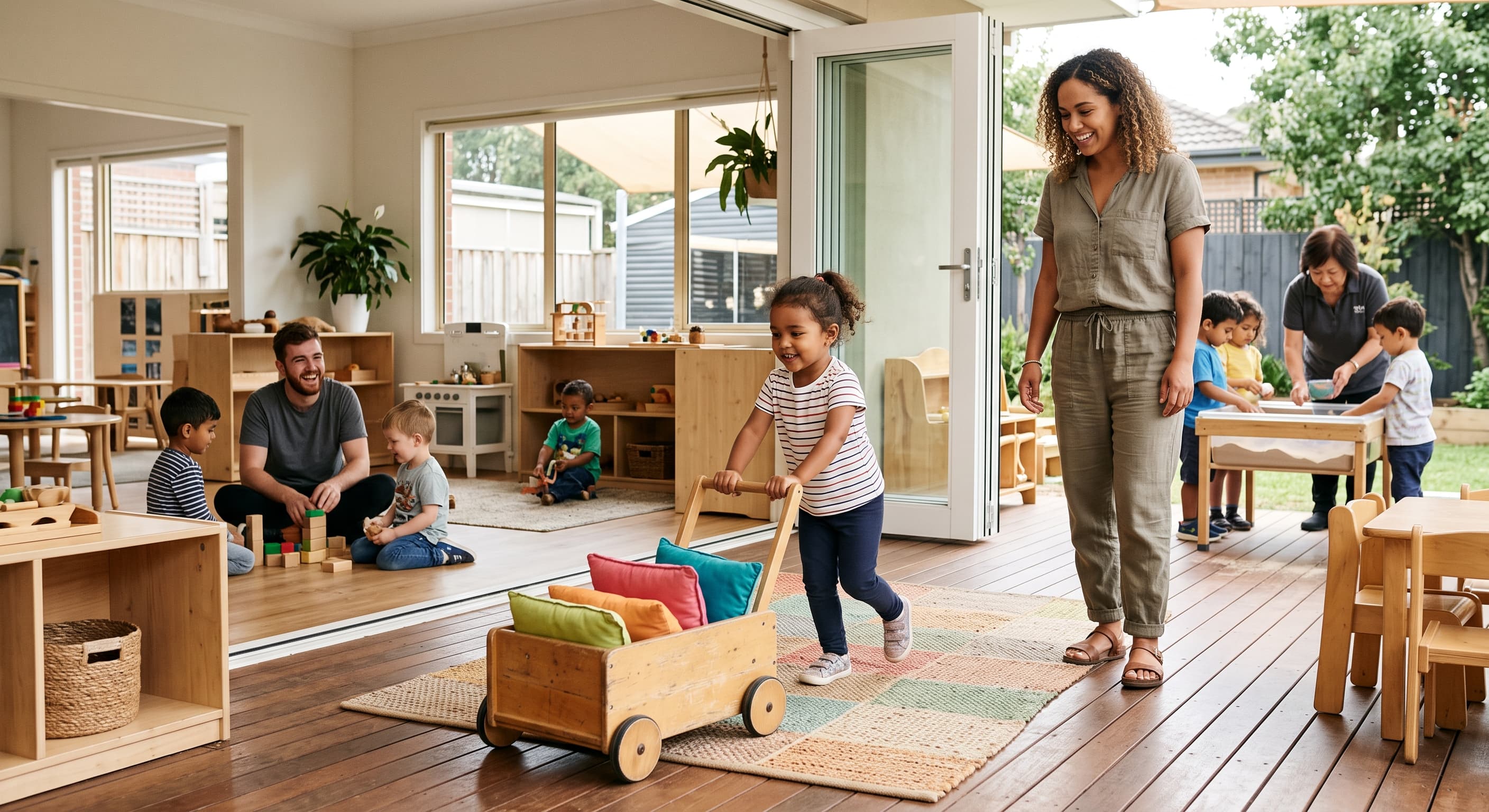
Regulation does not always look quiet
One of the easiest traps in early childhood is assuming that stillness equals regulation and movement equals dysregulation. For some children, movement is part of how they organise themselves, stay engaged, process sensory input and remain available for connection.
That means the question is not always whether the child is still. It is often whether the child is connected, purposeful, safe and able to keep participating in a way their body can manage.
Looking at emotional regulation through that wider lens can change how adults interpret children who fidget, pace, carry, wander, build, climb or need movement woven into the routine.
What is the child’s body telling us?
Some children become louder and more chaotic, while others become quiet, avoidant or unusually still. Both can be signs that regulation is becoming harder. This is why noticing early changes matters so much.
Some children move more when regulation is becoming difficult. They may pace, run, crash, climb, fidget, wander or seem unable to stay with the group in the way adults were expecting.
You may notice voices becoming louder, sharper, more repetitive or more urgent. For other children, speech may reduce and they may stop using words effectively when the demand becomes too high.
A child may appear distracted, scattered, stuck on one detail or unable to shift into the next part of the routine. This can look like disobedience from the outside, but it may actually reflect overload.
Some children move away, avoid eye contact, hide under furniture, turn their bodies away or become more controlling in play because connection feels harder to manage in that moment.
The child we may miss
In many teams, the child who runs, yells or resists is noticed quickly because their difficulty affects the group. The child who becomes unusually quiet, drifts away, watches from the edge, hides, shuts down or stops participating can be much easier to miss.
Yet these children may also be telling us that the load has become too much. They may need support just as much as the child whose struggle is louder and more visible.
A child does not need to be disruptive for us to ask whether the environment, the demand or the pace of the day is becoming hard to manage.
Looking wider than the child
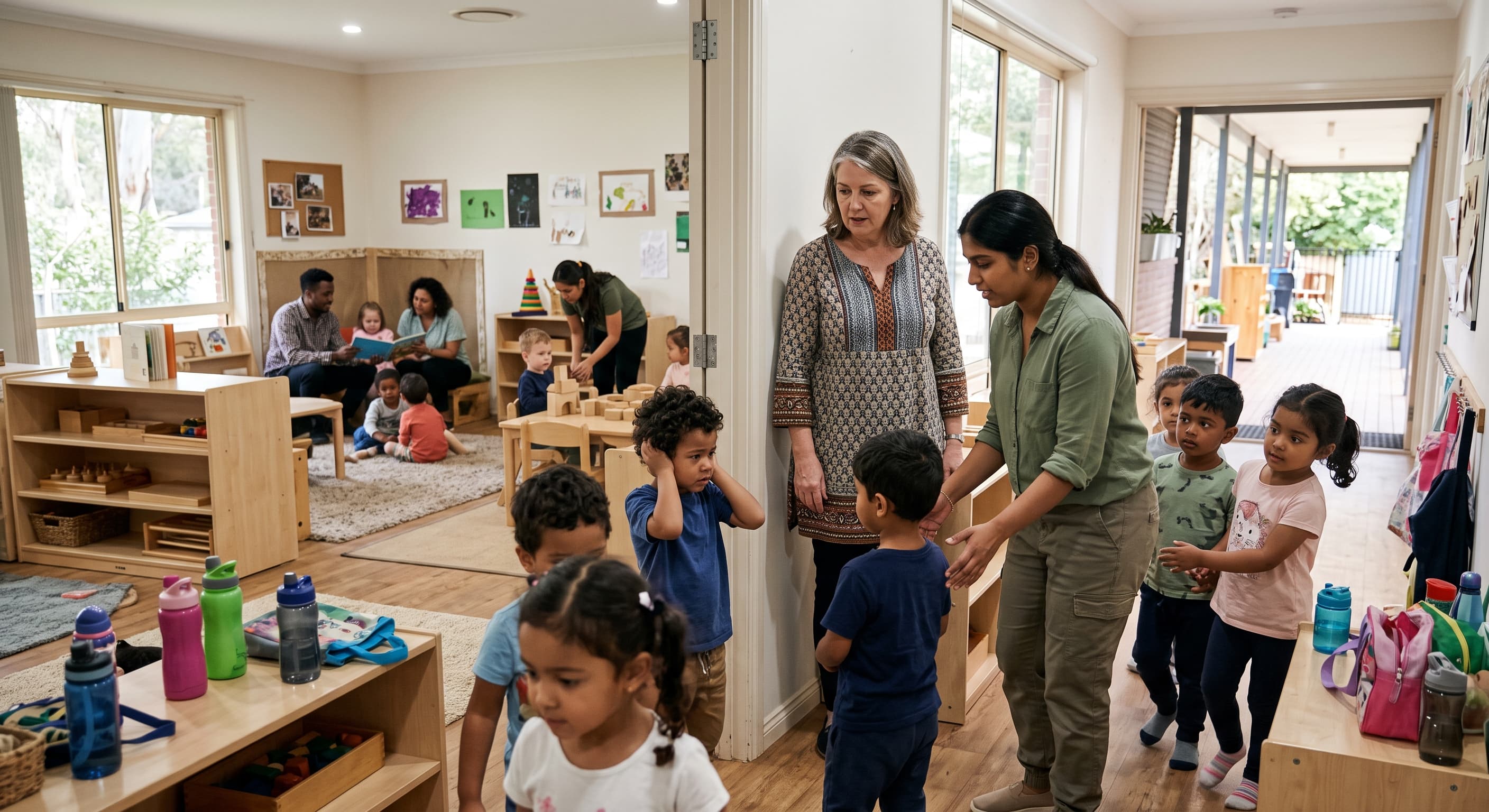
Transitions, crowded doorways, noisy spaces, long waiting, rapid instructions and sudden changes can all increase emotional load. When a child struggles at the same point each day, it is worth looking carefully at the routine itself rather than assuming the child just needs firmer behaviour management.
This does not mean we lower expectations endlessly. It means we become more curious about what is making success difficult and more thoughtful about how to adjust the demands around the child.
What educators can try
There is rarely one strategy that solves every difficult moment. More often, it is the quality of noticing, reflection and adaptation that makes the difference over time.
The earlier adults notice a change in the child’s body, participation or communication, the less likely the support is to become reactive and rushed.
Sometimes the most effective support is not adding a calming strategy but reducing noise, crowding, waiting, language or social pressure so the situation becomes more manageable.
If a child cannot manage the task in the way it is currently being asked of them, we may need to adjust how participation looks before expecting success.
Many emotional regulation difficulties emerge around stopping, waiting, moving, separating or shifting attention, so improving transitions often improves regulation.
When the same behaviour keeps happening, it helps to ask what the adults are noticing, what has already been tried and what may need to change around the child, not only within the child.
If you want something practical
If your team is trying to work out what to notice and what to try when behaviour keeps repeating, the free Regulation Ladder is a simple way to begin. It helps educators, leaders and families look at the same situation from different angles rather than reaching too quickly for one explanation.
Open the Free Regulation LadderKeep exploring
Explore how adult responses, environment and relationship influence a child's ability to stay connected and participate.
Look at how teams can strengthen judgement, reflection and confidence rather than simply collecting more strategies.
Explore what type of professional learning is more likely to influence everyday educator practice.
Frequently asked questions
Emotional regulation in early childhood is the developing ability to manage feelings, recover from frustration, cope with change and remain engaged enough to participate in everyday life. Young children often still need significant adult support while these skills are developing.
It can look like yelling, running, hitting, refusing, hiding, shutting down, becoming very still, leaving the group or finding it hard to recover after a challenge. It does not always look loud or disruptive.
No. It is also about participation, recovery, flexibility, communication and whether the child can remain connected enough to learn and be with others.
What looks sudden is often the point where accumulated demand has become too much. Sensory load, transitions, waiting, hunger, fatigue, social pressure or a build-up of smaller stresses may all contribute.
Begin by noticing what the child’s body, participation and environment are showing you. Then ask what part of the situation can be made more manageable before expecting the child to do something differently.
Regulator Champions is designed to support that process through practical Regulation Ladders, useful examples, recordings and broader professional learning support for teams that want to go further.
This page provides general professional learning information for early childhood educators. It is not individual clinical advice and should not be used to diagnose a child or assume that a particular behaviour has one specific cause.