Executive function
Build understanding of impulse control, working memory, flexible thinking, persistence, attention and the demands hidden inside everyday routines.
Early childhood professional development
The return on professional learning is what happens after the session finishes.
Your educators probably do not need another folder of strategies. They need learning that helps them understand what they are seeing, think more clearly when a situation becomes difficult, and feel more confident deciding what to try next.
That becomes particularly important around emotional regulation, transitions, sensory overload, participation, behaviour and the everyday moments when children need adults to co-regulate with them.
A useful question before booking professional development
Will this learning help my educators make better decisions next week?
If it is difficult to explain what educators might notice, try or discuss differently afterwards, the learning may still be interesting, but it may be harder for a busy team to carry it back into practice.
Professional learning in real rooms
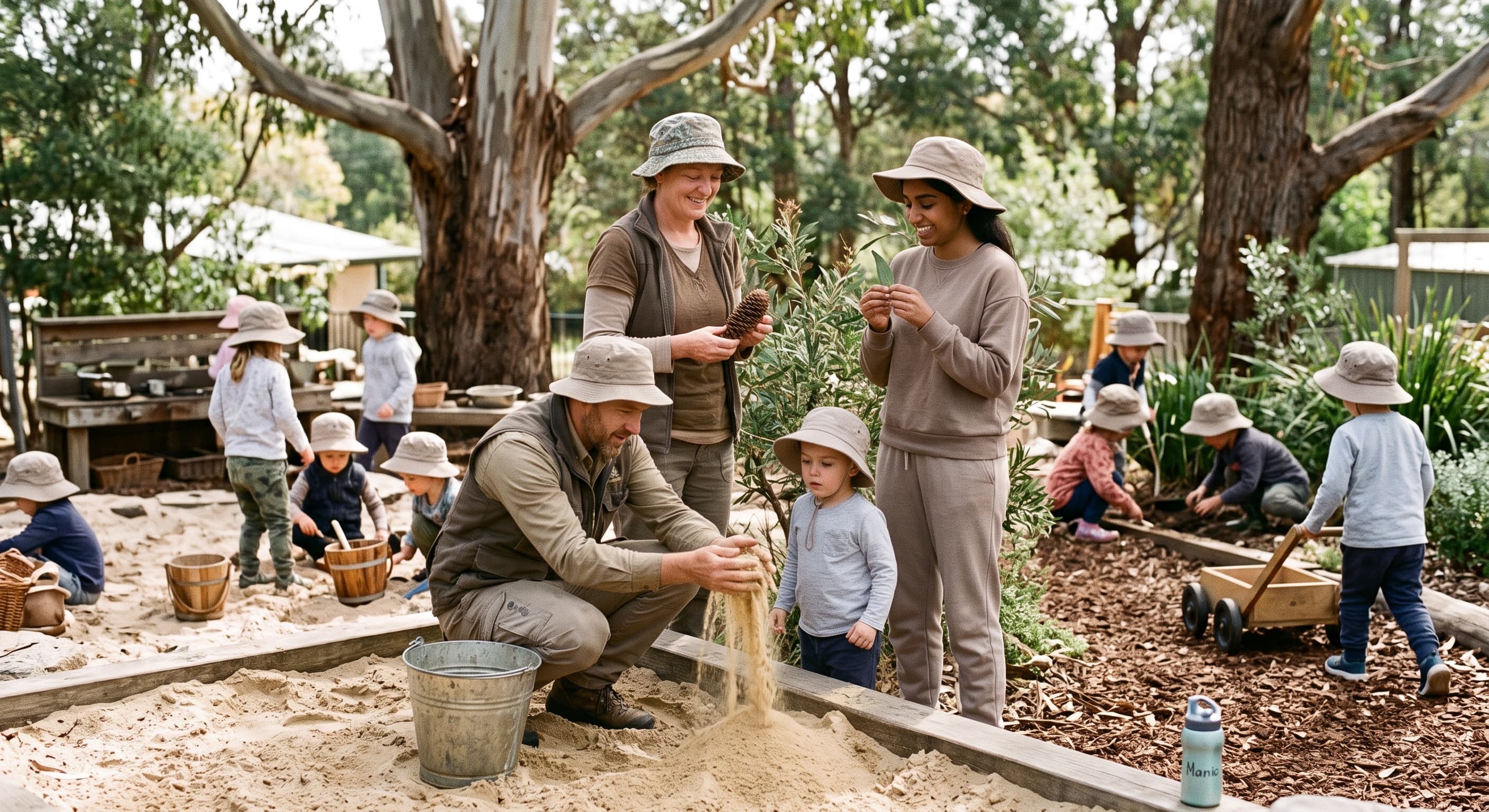
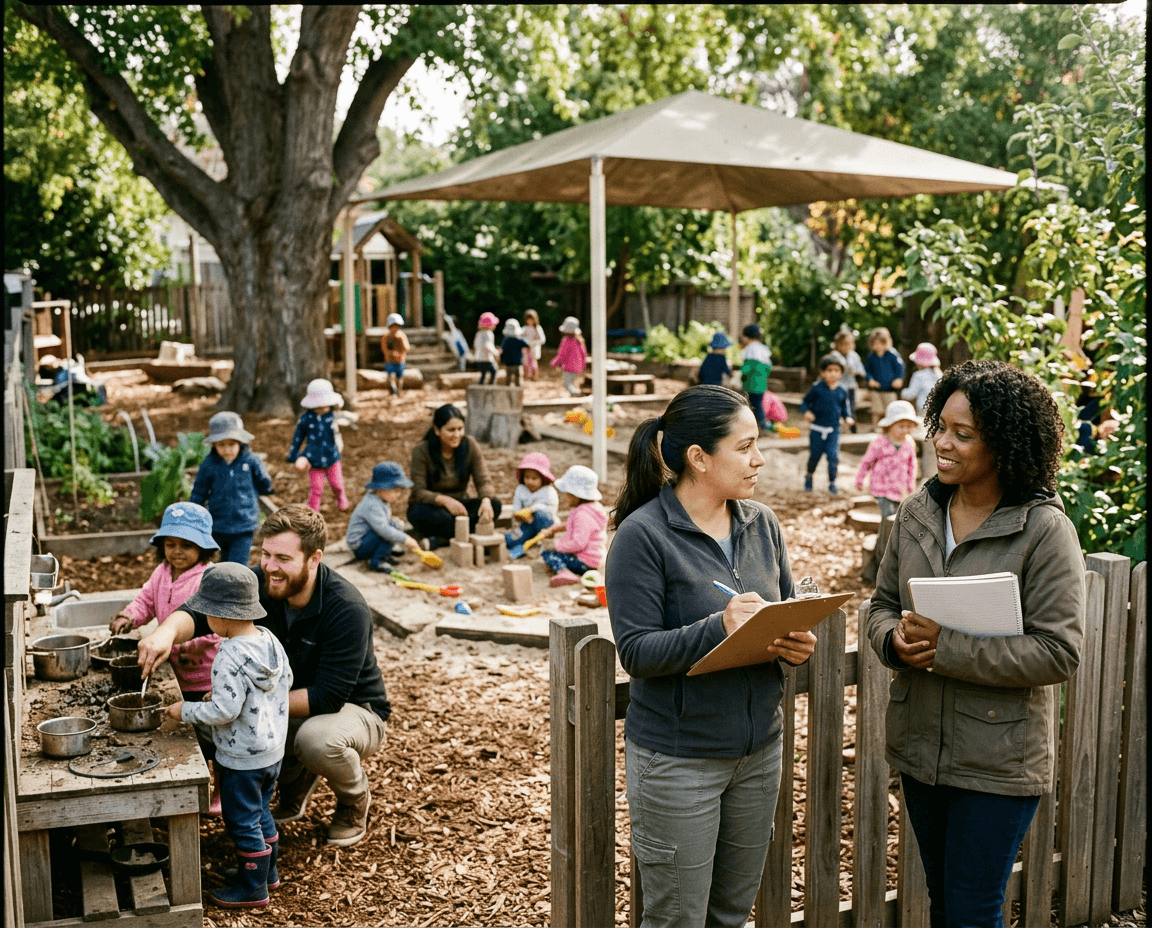
Some of the most useful professional conversations can happen while educators are already in the environment, watching what children are doing and talking quietly about what they are noticing.
One educator might notice that a child becomes unsettled whenever the play space becomes crowded. Another might notice that the same child stays engaged much longer when there is movement, water or a quieter position available. Neither educator needs to have the perfect answer immediately.
The value is in learning how to look more closely, compare observations and decide together what might be worth changing or trying.
Choosing professional development
Early childhood educators work in dynamic environments. A strategy that works beautifully for one child, room or routine may not work in exactly the same way somewhere else.
Strong professional development therefore needs to build understanding and professional judgement rather than simply provide another list of activities to copy.
Educators need enough knowledge to understand why an approach may help, and enough confidence to recognise when something needs to be adapted for the child, group or environment in front of them.
Good professional learning should make the educator more capable of thinking, not more dependent on being given the next strategy.
Professional development topics
These areas often overlap. A child struggling with participation may also be managing sensory load, executive-function demands, transitions and regulation at the same time.
Help educators recognise what dysregulation can look like and consider what children may need before, during and after difficult moments.
Read moreStrengthen the way adults use relationship, language, pacing, environment and predictable support while children develop regulation skills.
Read moreBuild understanding of impulse control, working memory, flexible thinking, persistence, attention and the demands hidden inside everyday routines.
Recognise when noise, movement, touch, visual load, crowding or physical state may be increasing the demands placed on a child.
Look more closely at arrivals, pack-up, group time and movement between activities instead of assuming repeated difficulty is simply non-compliance.
Move beyond giving educators more strategies and strengthen their confidence, reflection and professional judgement.
Read more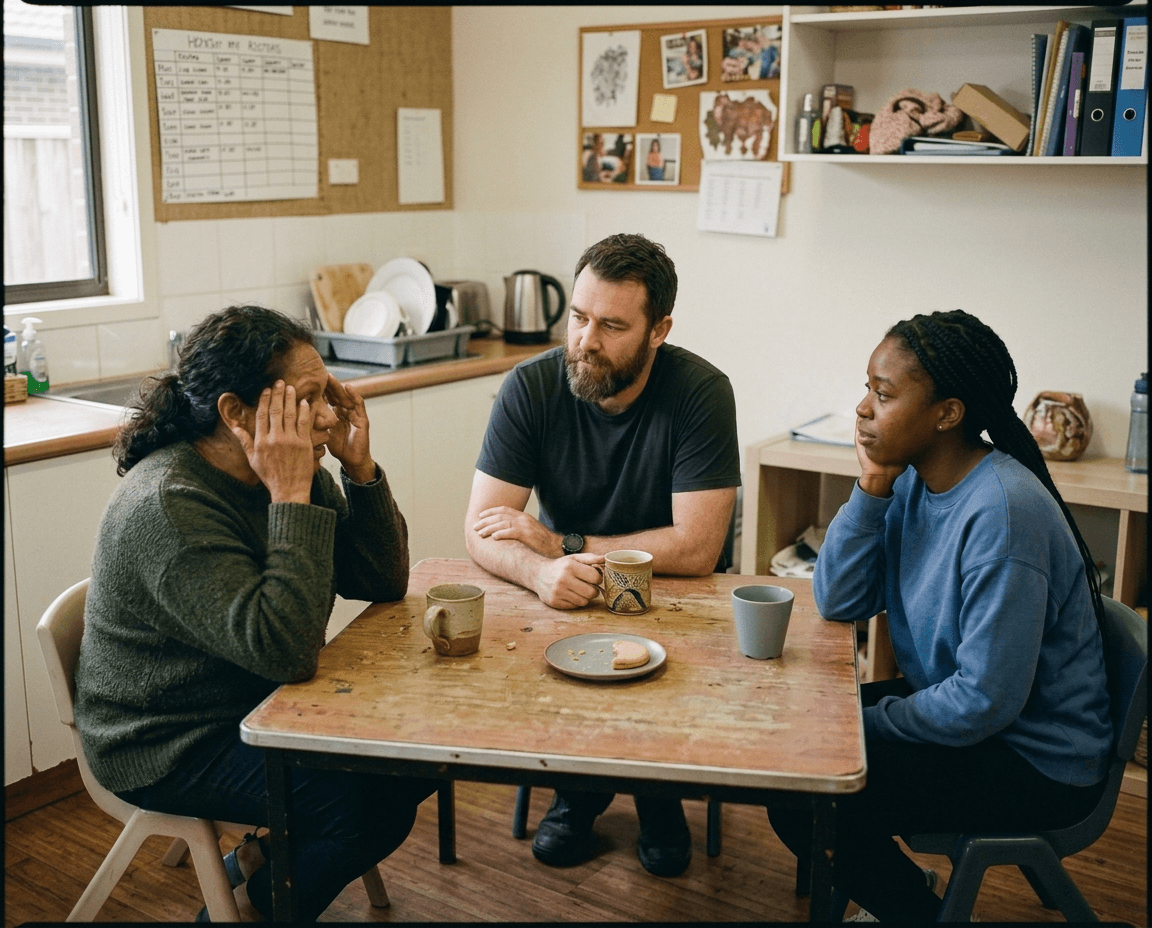
Professional learning for tired teams
A team can finish a long day carrying dozens of small moments with them. A difficult drop-off. A child who could not manage group time. An educator who felt themselves becoming frustrated. A strategy that worked for ten minutes and then suddenly did not.
Useful professional learning can give those experiences somewhere to go. Rather than beginning another abstract topic, the team can return to one real situation and ask what they noticed, what may have increased the pressure, what helped, and what they might change tomorrow.
That is professional learning too.
Beyond one-off training
Educators hear useful ideas, take notes and return to work, but may be left to work out by themselves how those ideas fit their rooms, routines and current pressures.
Educators learn, apply, reflect, adjust and revisit the topic so the knowledge gradually becomes part of everyday practice.
What practical professional development looks like
The topic connects directly with something educators or children are currently experiencing.
Educators understand the developmental, sensory or regulation reasoning rather than only being handed another activity or strategy.
The learning makes sense within noisy, busy and imperfect early childhood environments.
Educators learn principles they can adapt rather than being told that one response will work for every child.
Teams have an opportunity to try the learning, discuss what happened and decide what should change next.
The learning can become part of team conversations rather than sitting with the one educator who attended.
Whole-team professional learning
When one educator attends training, they can return enthusiastic and still struggle to influence what happens across the wider team.
Whole-team professional learning gives educators shared language and gives leaders a stronger foundation for reflection and implementation conversations.
This becomes particularly important for regulation and co-regulation because a child may interact with many different educators across the week.
Shared practice does not mean every educator responds identically. It means the team has a more consistent way of noticing what may be happening and talking together about why they are choosing a particular response.
Before you book professional development
You do not need to assess professional learning by how impressive the slide deck looks. These questions can help you think about whether the learning is likely to be useful to the educators and children in your own service.
What are our educators actually finding difficult right now?
Does this professional learning connect to an identified team or program need?
Will educators understand the reason behind the strategies being recommended?
Can the learning be applied to our own rooms, routines and children?
Will our team have opportunities to revisit the learning after trying it?
How will we know whether educator practice has actually changed?

Regulator Champions
Regulator Champions helps early childhood teams notice what may be happening underneath behaviour, think about the environment and adult response, and decide what might be worth trying next.
A Regulation Card can be enough to start a ten-minute conversation. A recording can help when the team wants to understand the topic more deeply. A question can be brought back when the strategy that sounded good on paper becomes more complicated in a real room.
The aim is not for every educator to complete another large course. It is to give the team something useful to return to when real situations arise.
Connect regulation with sensory processing, movement, executive function and participation.
Apply learning to arrivals, transitions, group experiences, sensory overload, distress and other everyday pressure points.
Give educators time to notice, trial, review and make the next practical adjustment.
Quality and professional learning pathways
The core professional learning can be used internationally. These pages explain some of the quality, professional development and funding language that may be relevant where your team is based.
Professional development, NAEYC, Developmentally Appropriate Practice and quality improvement.
National Quality Standard and Quality Improvement Plan connections.
Information for Victorian kindergarten services.
Information for Queensland kindergarten services.
Frequently asked questions
Early childhood professional development includes learning that strengthens educator knowledge, skills, confidence and professional judgement. It can include workshops, mentoring, reflective practice, online learning and whole-team professional learning.
Useful topics can include emotional regulation, co-regulation, executive function, sensory processing, movement, transitions, participation, behaviour support, inclusion and reflective practice.
Online professional learning can be useful when it is practical, relevant and supported by implementation and reflection. The delivery format matters less than whether educators can connect the learning to everyday practice.
Whole-team professional learning can be particularly useful when an organisation wants shared language and more consistent practice. It also makes it easier for leaders to continue the conversation after the initial learning.
Start with an identified need, give educators time to trial what they have learned, revisit the topic and create opportunities for team reflection rather than moving immediately to the next subject.
About Robyn
Robyn is an Accredited Exercise Physiologist and Developmental Educator and the founder of Play Move Improve. Her work with early childhood educators focuses on making developmental, movement, sensory, regulation and executive-function knowledge practical within real learning environments.
Start with a free Regulation Ladder to see how the approach works, or explore the six-month and twelve-month Regulator Champions options for whole-team support.
This page provides general professional learning information for early childhood teams. Professional development should be chosen in response to your educators, children, local requirements and identified improvement priorities.