I first started thinking more deeply about this after hearing from educators who had completed child-safety training and then found themselves questioning what to do in very ordinary moments of distress.
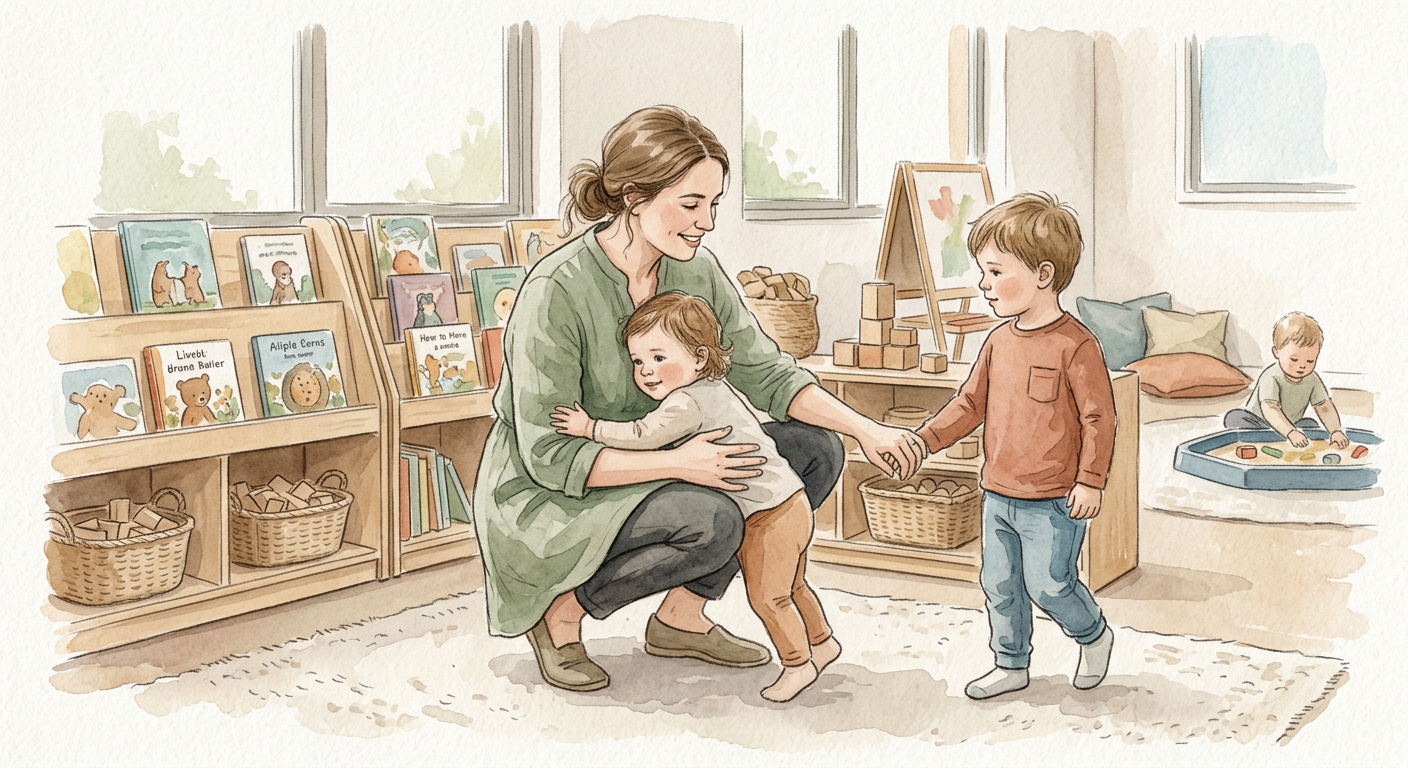
A child cries at drop-off and reaches towards a trusted educator. Another child falls and immediately seeks physical comfort. An educator wants to respond warmly, but hesitates because they are trying to make sure their actions remain appropriate, visible and professionally defensible.
At the same time, I have also spoken with services that are not finding this difficult at all. Their teams feel confident about when touch is appropriate, how to respond to a child's cues and where professional boundaries sit.
That distinction matters. We do not need to create fear where there is already thoughtful, confident practice.
Child safety and warmth do not have to sit on opposite sides
Strong safeguarding practice matters. Children need adults who understand professional boundaries, consent, visibility, organisational expectations and their responsibilities when something does not feel right.
But a child-safe environment should not require educators to become emotionally distant from children who are upset, frightened or seeking reassurance.
The more useful question is often not simply, “Am I allowed to touch this child?” It is: “What is this child communicating, what is the purpose of my response, and is the contact appropriate in this context?”
Start with the child's cues
Physical comfort should not be something adults impose because they personally prefer closeness. The child's body gives us useful information.
The child moves closer
They may be seeking proximity, reassurance or physical comfort. Notice whether they are actively approaching the educator, reaching, leaning in or otherwise inviting closeness.
The child pulls away
Turning away, stiffening, moving backwards or trying to leave are important cues that the adult should reduce or stop physical contact unless immediate safety requires otherwise.
The child is overwhelmed
A distressed child may not be able to answer a series of questions about what they want. Educators still need to observe body language, context, safety and the least intrusive response that helps.
Appropriate touch is also about purpose
The same type of physical contact can mean very different things depending on why it is happening and how the child responds.
Briefly comforting a distressed child who approaches a familiar educator is different from repeatedly encouraging physical closeness that the child has not sought. Supporting a child physically to prevent an immediate safety risk is different from using physical contact primarily to force compliance.
This is why blanket rules are often difficult to apply to every real-world interaction. Educators need policies and safeguarding expectations, but they also need enough professional judgement to interpret the situation in front of them.
A simple way to think through the moment
When a team is feeling uncertain, I use a very simple sequence: Pause, Notice, Respond.
Pause
Notice your own reaction first. Are you rushing, frightened of getting it wrong, feeling pressure to stop the crying quickly, or responding automatically?
Notice
Look at the child. Are they moving towards you or away? What is happening in their face, posture, voice and movement? What happened immediately before this moment?
Respond
Choose a response that supports the child while remaining purposeful, appropriate, visible and consistent with your organisation’s expectations and the requirements that apply where you work.
Your team may not need this resource
If your educators already feel clear and confident about safe touch, comforting children and professional boundaries, I would not manufacture a problem that is not there.
There may be far more pressing professional learning needs in your rooms right now: difficult drop-offs, transitions that repeatedly escalate, children struggling to participate, sensory overload, biting, running, shutdown, group-time expectations or educators feeling unsure what sits underneath repeated behaviour.
Those are the broader regulation questions I am spending much more of my time helping teams work through.